
meet the founder:
Registered Clinical Trichologist and Founder of Tulip Trichology.
I’ve spent more than 20 years working with hair, but my interest has always gone much further than how hair looks. I’ve always wanted to understand the “why”– why hair behaves differently, why products and chemicals affect its structure, and why changes in our health can have such a significant effect on our hair and scalp.
Over the years, more and more clients in the salon asked me questions about hair loss, excessive shedding and scalp problems.
I wanted to help, but I also knew there was a limit to the advice I could responsibly give as a hairdresser. Telling someone to try another shampoo or serum didn’t feel like enough when what they really wanted to know was:
“Why is this happening to me? …and what can I do to stop it?”

my own experience with hair loss
My interest in trichology became much more personal when I experienced significant hair shedding myself. At the time, I found it frightening. I worried about how much hair I was losing and whether it was going to stop. Like many people, I initially put it down to stress, but I later came to understand that my health was playing an important part too.
It made me realise just how distressing changes to your hair can be and how frustrating it is when you don’t understand why they’re happening. Around the same time, I was seeing clients who were experiencing similar worries.
I remember one client in particular who was concerned about her receding hairline and had been told that it was simply down to menopause. She wanted someone to take the time to look more closely and explain what might actually be happening.
Those conversations made me want to know more.

from hairdressing to trichology
In 2022, I took my first formal step into trichology, completing an Introduction to Trichology course with respected trichologist Mark Blake.
I loved it.
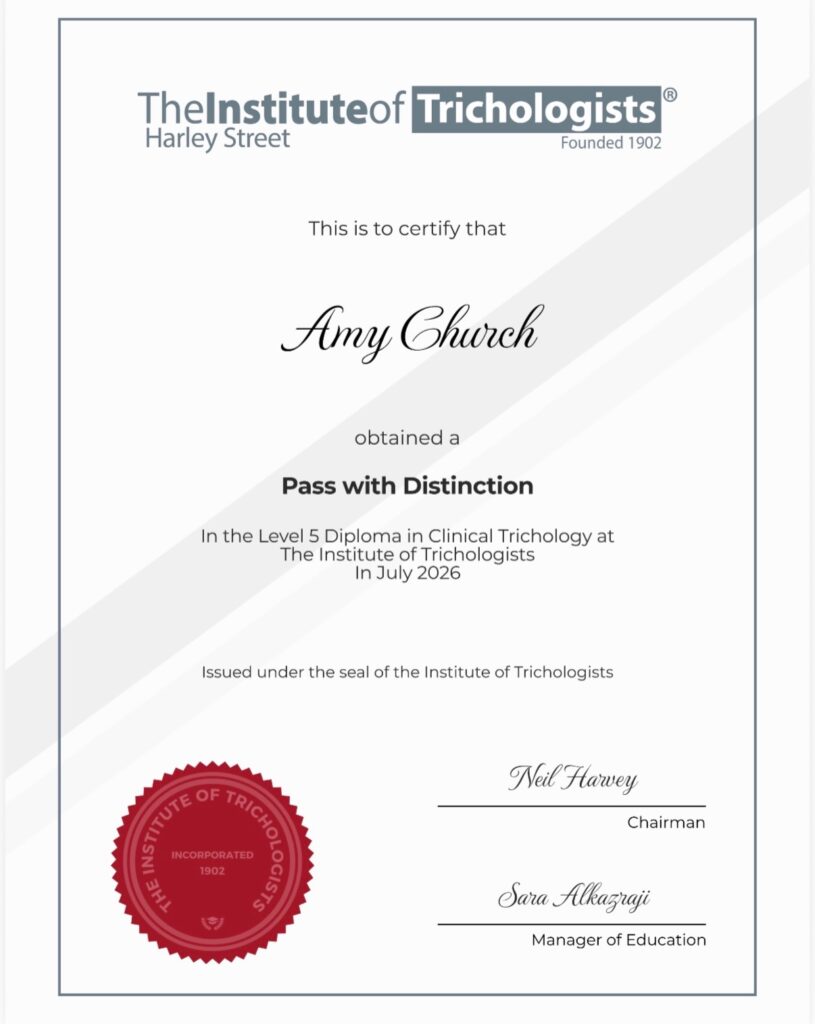
I went on to study with the Institute of Trichologists, completing its intensive three-year trichology programme, including clinical training at Harley Street in London, and I graduated with Distinction.
My studies covered areas including hair and scalp disorders, anatomy and physiology, dermatology, nutrition, endocrinology and immunology. This gave me a much deeper understanding of the many different factors that can influence our hair and scalp.

I am a registered trichologist with the Institute of Trichologists, whose UK register is accredited by the Professional Standards Authority for Health and Social Care (PSA).
Being on the register isn’t simply about holding a qualification. Registered trichologists are required to follow the Institute’s Code of Professional Practice and Ethics, maintain appropriate professional insurance and undertake recognised Continuing Professional Development (CPD) each year.
For me, continuing to learn is an important part of being a trichologist.
Research and understanding of hair and scalp conditions continues to develop, so my education didn’t finish when I graduated. I regularly undertake further training, attend professional education and keep up to date with research so that the advice I give my patients remains informed and evidence-led.
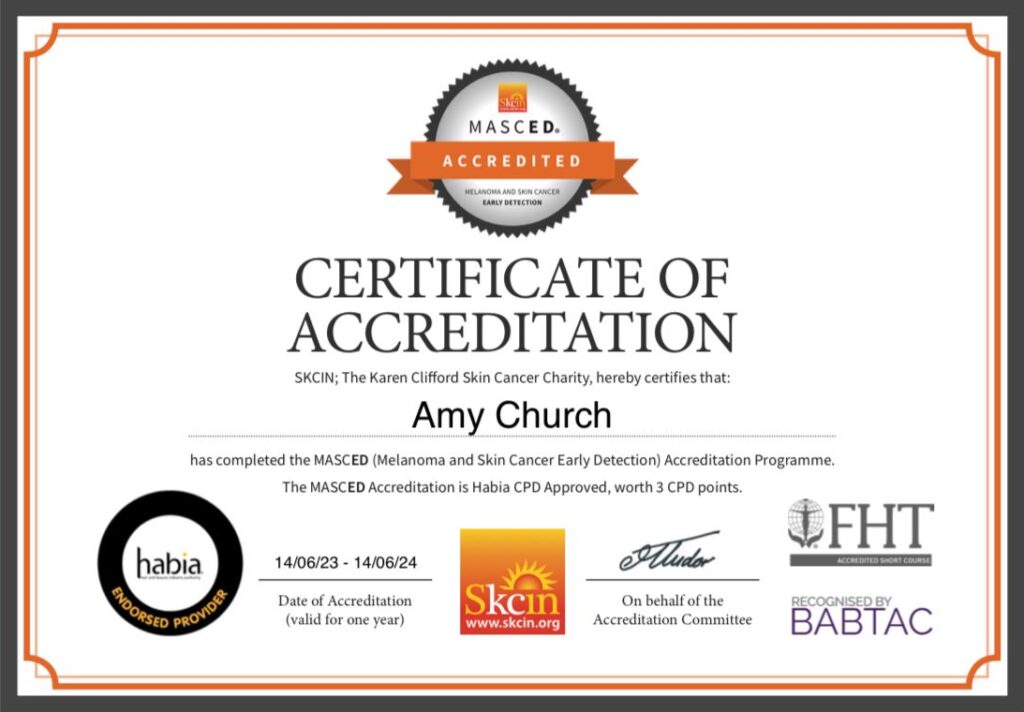
I’m also MASCED accredited, which provides additional training in recognising the signs of potential skin cancers and understanding when appropriate medical referral is needed.

I created Tulip Trichology because I wanted to offer the kind of appointment I would have wanted when I was experiencing hair loss myself.
Time to talk. Time to examine what’s happening properly. And time to explain it in a way that actually makes sense.
Hair loss isn’t always caused by one thing. Health, genetics, hormones, nutrition, medication, stress, lifestyle and scalp health can all play a part, which is why I believe it’s important to look at the whole picture rather than simply focusing on the hair you can see.
your consultation isn’t about finding a product to sell you.
It’s about listening to what’s been happening, examining your hair and scalp carefully, considering possible contributing factors and helping you understand the most appropriate next steps.
Sometimes that may involve treatment at Tulip Trichology. Sometimes further blood tests may be useful. And sometimes the right thing to do is to write a referral to your GP or another healthcare professional for further investigation.
I’ll always be honest about what I think will and won’t be worthwhile.
Although Tulip Trichology is a new chapter for me, looking after people isn’t.
I founded Tulip Hair in Stourbridge over 16 years ago, with the aim of creating somewhere people could feel comfortable, listened to and genuinely looked after.
that same approach sits at the heart of Tulip Trichology.
I know that walking into a clinic to discuss hair loss or a scalp problem can feel daunting, particularly if you’ve been worrying about it for some time.
My aim is for you to leave feeling that you’ve been listened to, that you understand your hair or scalp a little better, and that you have a clear plan for what happens next.
Amy Church AIT
Clinical Trichologist
Founder, Tulip Trichology